
Heads up: This post contains Amazon affiliate links. We earn a small commission on qualifying purchases at no extra cost to you. Full disclosure.
The most stressful parties are the ones where everything happens the week before. The most effortless ones follow a timeline. Not a rough mental checklist, an actual written plan that breaks the work into manageable pieces across the weeks leading up to the event. Here’s the one that actually works, whether you’re planning a bridal shower, a birthday, a baby shower, or anything in between.
6 Weeks Before: Lock In the Big Three
Six weeks out, there are exactly three things that matter: the date, the venue (or host’s home), and a rough guest count. These three decisions determine everything else. You can’t finalize a food order without a headcount. You can’t order enough chairs without knowing the venue capacity. You can’t confirm vendor availability without a locked date. Everything downstream depends on these three being settled.
Lock in the date first by checking with the key guests, the guest of honor, immediate family, the inner circle. Once the date is set, everything else becomes a scheduling problem rather than an open question. A date that everyone can make is significantly more important than a date that’s convenient for the planner.
Pick your theme and color palette at six weeks too. Browse Pinterest, look at the Events HQ theme library, and commit to something. Decision fatigue is real: the longer you wait to lock in the aesthetic, the more you’ll second-guess every purchase. Once the theme is set, every buying decision becomes easier, does this fit the palette? Yes or no. That clarity is worth a lot.
Send save-the-dates or informal texts for anything more than 20 people. Six weeks’ notice is the minimum for a weekend event that people need to plan around. For events over 30 guests or involving travel, eight weeks is better.
4 Weeks Before: Order the Long-Lead Items
Four weeks out is the window for anything custom or slow-shipping. If it says “ships from seller” instead of Prime, if it’s a personalized item that needs production time, if it’s coming from overseas, this is the week to order it. Missing this window is one of the most common reasons parties don’t look the way they were supposed to.
What falls in this category: balloon arch kits and large garland supplies (they take time to assemble even once they arrive), personalized banners with the guest of honor’s name, custom cups or koozies, backdrop curtains and fabric drapes, any large-scale decor items that ship in multiple boxes, and floral foam or craft materials for DIY centerpieces.
If you’re using any vendors, a photographer, a caterer, a baker for a custom cake, a makeup artist, a DJ, confirm those bookings now. Reputable vendors on popular weekend dates fill up fast, and four weeks is sometimes cutting it close. Confirm with a deposit and get the details in writing.
Send formal invitations at four weeks if you’re doing printed invites. For digital invites (Evite, Paperless Post, a group text), you can wait until three weeks out, but sooner is always better for people managing busy calendars.
2 to 3 Weeks Before: Fill In the Gaps
This is the Prime window. Order all remaining supplies that are eligible for standard delivery: tableware, table runners, drinkware, candles, florals and greenery, balloon supplies beyond what you already ordered, serving trays, and any small decor fills. Anything with Prime delivery is safe to order here.
Finalize the menu. If you’re cooking, write out every recipe and turn them into a single unified shopping list. If you’re ordering food, confirm the guest count with your caterer and communicate any dietary restrictions that have come in from RSVPs. For a grazing or charcuterie spread, calculate quantities based on your confirmed guest count plus 20% buffer.
Chase the non-responders. Go back through your invite list and follow up with anyone who hasn’t responded. You need a real headcount, not an estimate, an actual number, for food quantities, seating, and favors. Two weeks out is the right time to make those calls or send those texts. People forget, lives are busy, and a gentle nudge is entirely appropriate.
Start shopping for fresh elements. Non-perishable groceries, pantry staples, alcohol, mixers, all of this can be purchased now. The only things to hold off on are fresh produce, fresh flowers, and anything that needs to stay refrigerated.

1 Week Before: Prep, Test, and Confirm
One week out, set up whatever you can in advance. The backdrop, the table layout, the seating arrangement, the balloon garland if you’re assembling it yourself. A test setup is invaluable: this is when you discover that the balloon arch is bigger than the wall you planned for, that the runner is two inches too short for the table, or that the color of the tablecloth doesn’t actually match the plates in real light. Catching these problems with a week to spare means you can reorder or adjust. Catching them the morning of means you improvise or go without.
Prepare non-perishable food elements this week: sauces, dips, cookie bases, granola, anything that stores well sealed in the fridge. Make the drinks mix in advance if it’s a batch cocktail. Do any baking that can be done and frozen.
Confirm with all vendors one more time, a brief “we’re confirmed for Saturday, any questions from your end?” message goes a long way. Vendors appreciate hosts who communicate proactively, and it surfaces any issues before they become day-of surprises.
Write out the day-of timeline and share it with anyone helping you. Every person who’s involved in setup should know what they’re doing and when. Written timelines remove ambiguity and free you from being the coordinator of every small decision on the day itself.
2 to 3 Days Before: The Final Push
Grocery run for all perishables: fresh produce, dairy, anything that needs refrigeration. Pick up fresh flowers at this point too, two to three days before gives them time to open up and look their best by party day, especially if you’re working with flowers that arrive tightly budded.
Do a full supply audit. Lay out everything you’ve ordered and check it against your list. This is when you find the things that didn’t arrive, the items that are the wrong size, and the package that got lost in transit. Two to three days gives you enough time to make an emergency Amazon order or run to a local store if needed.
Prep the space. Deep clean the main gathering areas, tidy up anything that doesn’t need to be out, set up furniture in the configuration you planned. The space should be essentially ready to style on the day before the party.
The Day Before: Style and Breathe
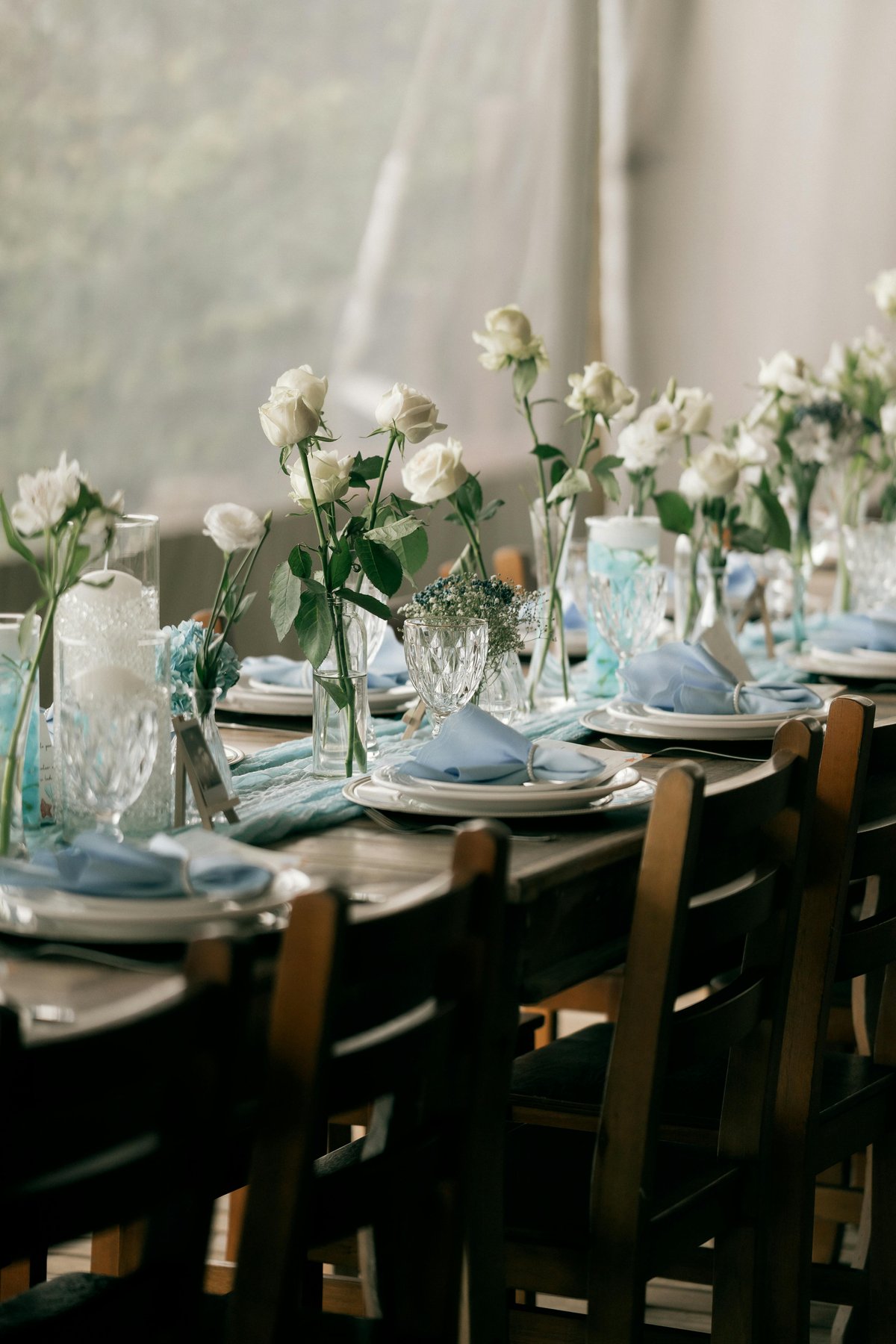
The day before is for styling: set the tables, hang the backdrop, put up the balloon garland, arrange the dessert table, set out signage, and get the space 80% of the way there. Leave only the things that need to happen day-of (fresh flowers in vases, food out, candles lit) for the actual party day.
If you’ve done the work leading up to this point, the day before should feel manageable rather than chaotic. The goal is to go to bed with most of the setup done so that party day feels like the last 20% rather than the whole 100%.
Charge any devices you’ll need: phone for music and communication, camera if you’re taking photos, ring light or any battery-powered lighting. Put out the guest book with a pen. Set up the photo backdrop. Lay out the guest of honor’s chair and any designation items (crown, sash, balloon).
Day Of: The Final Details
Party day tasks should be minimal if the previous days went according to plan: fresh flowers in vases, food set out and labeled, candles lit, music started, door unlocked. Give yourself one to two hours before the first guest arrives to do the final touches and get yourself ready.
Do not skip getting yourself ready. It’s easy to be so focused on the setup that you’re still in party-prep mode when guests arrive. Give yourself a buffer, at minimum 30 minutes, ideally an hour, to change, do what you need to do, and walk back into the space as a host rather than a laborer. The energy shifts, and guests can feel it.
Take a photo of the fully styled space before anyone arrives. This is the photo where everything is perfect and undisturbed, the food is full, the balloons are inflated, the place settings are untouched. You will want this photo. It’s almost always the best one of the day.

You might also like

How to Make Any Party Space Feel More Elevated
You don’t need a stunning venue to throw a stunning party. The right styling…
Read more →
How to Manage Event Setup and Cleanup Without Losing It
Setup and cleanup are the invisible parts of a great event. Here's how to…
Read more →
How to Keep Guests Happy and Comfortable at Your Event
The décor gets the double taps. But how your guests actually feel at your…
Read more →